NBFC Scale Based Regulations (SBR)
NBFCs have played a significant role in India’s development. They play a crucial role in the financial system that banks do not necessarily provide. They have grown in size and complexity and, thus, need robust regulatory treatment. To this end, the RBI has brought new regulations for NBFCs.
History of Scale-Based Regulations
On 19th October 2023, RBI published Master Direction – Reserve Bank of India (Non-Banking Financial Company – Scale Based Regulation) Directions 2023 (SBR Master Directions). These replaced earlier frameworks governing NBFCs.
On 4th December 2020, RBI announced the need for a revised framework. Later in 2021, a discussion paper was released introducing a scale-based approach. The new guidelines came into effect from 1st October 2022.
Old Regulations
Previously, NBFCs were classified based on liabilities, asset size, and nature of activities.
They were divided into:
- NBFC-D (Deposit taking NBFCs)
- NBFC-ND (Non-deposit taking NBFCs)
- NBFC-ND-SI (Systemically important NBFCs)
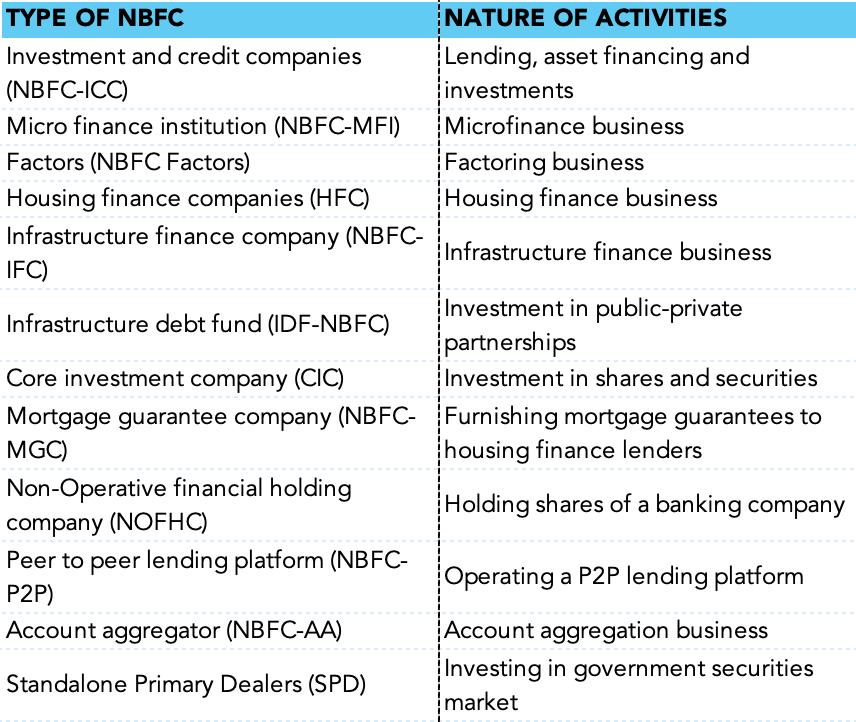
NBFCs were also categorized by business type such as NBFC-MFI, CIC, and others based on their activities.
New Regulations
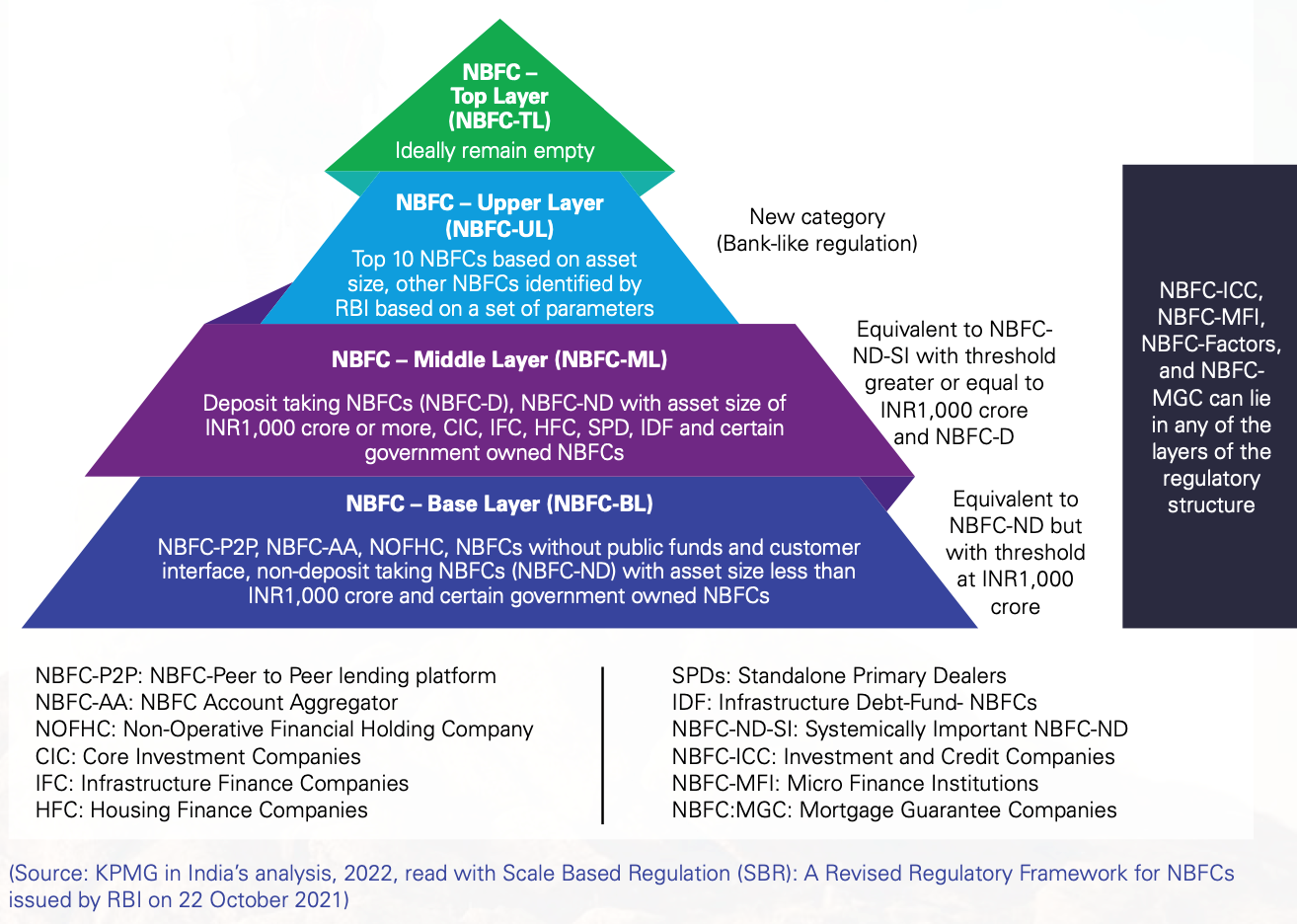
RBI introduced a 4-layer structure: Base Layer, Middle Layer, Upper Layer, and Top Layer.
Base Layer
Includes NBFCs with asset size below INR 1,000 crores such as NBFC-ICC, NBFC-MFI, NBFC-Factor, NBFC-MGC, NBFC-P2P, NBFC-AA, and others.
Middle Layer
Includes NBFC-D, large NBFCs above INR 1,000 crores, HFCs, CICs, NBFC-IFC, IDF-NBFC, and SPDs.
Upper Layer
Includes NBFCs identified by RBI for enhanced regulatory supervision. These entities remain in this category for a minimum of 5 years.
Top Layer
This layer is usually empty and is reserved for NBFCs that may pose systemic risk in the financial system.
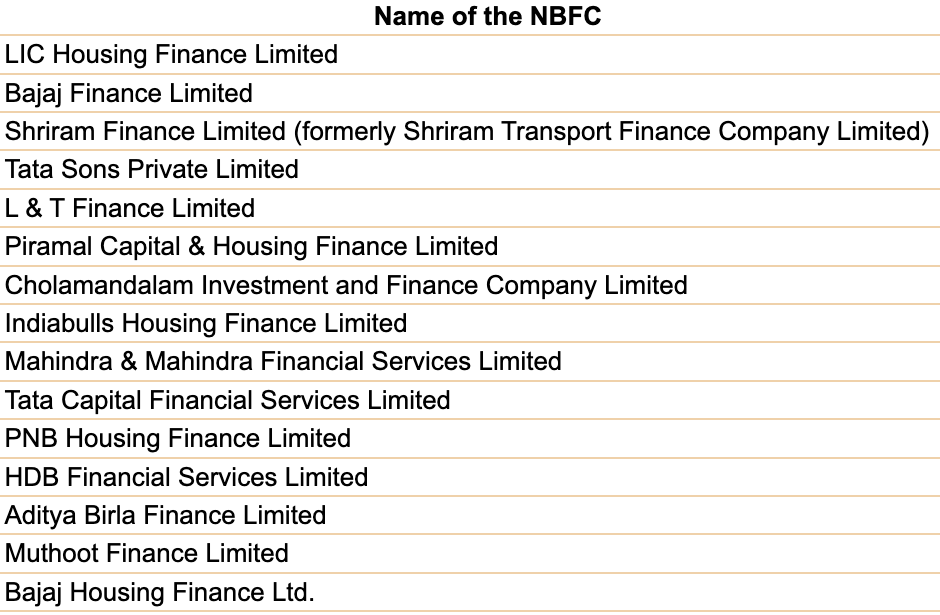
The following NBFCs have been classified under the upper layer for FY24:
The SBR framework ensures risk-based supervision and strengthens financial stability in the NBFC sector.